GENUS LUPUS
STARVE ACRE // RABBIT TRAP : Folk Horror Twin Tales
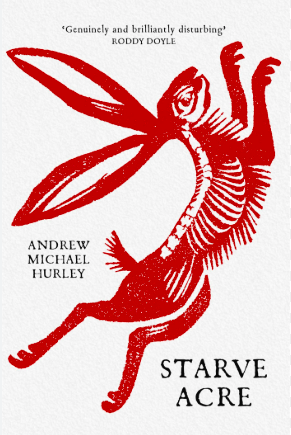
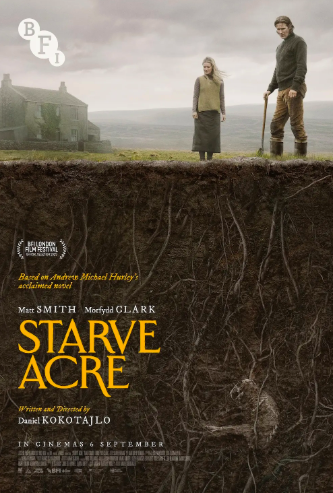
Starve acre is a sublime folk horror written by Andre Michael Hurley. It follows two parents grieving the death of their disturbed child. Set against the snow of a wintery rural landscape, it drips with gothic galore. I stole the book from my hare-obsessed partner and read it towards the end of last year. For someone suffering from serious doom-scroll-induced-reader’s-block it felt deliciously like tumbling down a rabbit hole. I swallowed the book, or rather it swallowed me, in just over 3 days. It was the first book I had finished (without seriously forcing it) in potentially a couple years. I have been meaning to write a book review, or something about it, ever since. You know when you are so impacted by a piece of art that you feel called to respond? That’s how I felt. Immediately compelled to write a love letter back to the thing I was totally infatuated with. But, as usual, my nature as a self-conscious perfectionist (virgo) got in the way. I was left in a state of complete creative paralysis. Having neglected my creative urge for so long, I simply didn’t know where to start, what to write, what to draw. How could I possibly express how the book had made me feel, when the feeling was so deep in my belly that my tongue couldn’t reach it? How do you talk back to something that is speaking in symbol, that pricks hair on warm skin whilst tugging at some intuitive root you carry, buried and knotted in your dark places? How does the water describe the impact of a raindrop that is still rippling outwards? I couldn’t fathom speaking the same language as Starve Acre, let alone answering back.
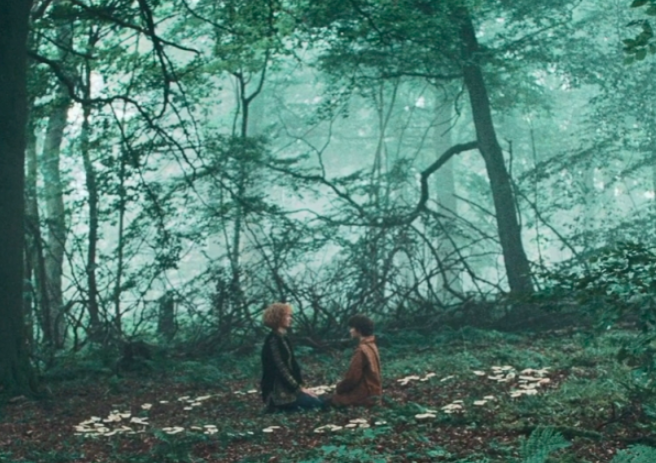
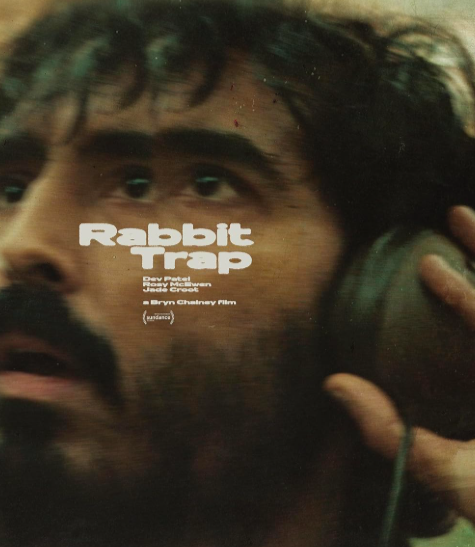
And Now Rabbit Trap!! This weekend I watched Bryn Chainy’s Rabbit Trap. Clearly I have some unresolved trauma or psychological fixation related to the genus lupus. It is a similar folk horror tale; there is a couple, and a boy, and lupus, and the natural world, and a maddening sensation that floods the marrow in your bones. Again I feel compelled to tell everyone about it. To become a town cryer screaming “There’s something you need to see here, it’s scary (but it’s also home?), and there’s something with four legs and two long ears, and it lives out there, and it lives in you and it lives in me, there’s something here and it’s happening, what do we do!?”. Fortunately, I work and study with some spooky people who like horror films, so town crier I became and I have spent a solid proportion of my day gushing and explaining Rabbit Trap’s premise. Trying to entice my peers into watching without spoiling it, bread-crumbing, setting a rabbit trap of my own I guess. For anyone reading - let me try and trap you… Firstly, it stars Dev Patel, Rosy McEwen and Jade Croot... yes Dev Patel…Need I say anymore? Beyond that it follows a couple who have moved to the wilderness of the welsh country side, in which most of the film is shot. Sound is the fourth protagonist (or antagonist) of the film as Dev and Rosy’s characters, musicians, collect and distort recordings on 70s analog equipment. There is sound, sex, music, cigarettes, a fairy-ring (mushroom circle), a strange child, a sleep-paralysis-demon, woods, sounds, caves, rabbits, traps, woods, more sounds, moss, another rabbit, and finally release. It is folklorish, it is delicious and it left me utterly awestruck.
3 days later and I am still chewing on it, chewing on the images and thinking about folklore. Thinking about the hermetic principle, as within as without, as above so below. Thinking about how the human mind projects itself onto to the natural world around us, and how the stories we tell about this natural outer-inner world can sit in our subconscious simmering out of sight. How they cook us, healing fractures and balming wounds whilst our conscious-mind’s attention is somewhere else.
Spoilers Ahead ! Proceed with Caution!
〰️
Spoilers Ahead ! Proceed with Caution! 〰️
I have been thinking a lot about Dev’s dreams. In the film he is haunted by a dream-paralysis type demon, which at one point he calls dad. It is rotting, and it eats a rotting apple. At one point it puts the rotten fruit in Dev’s mouth, who is suggested by another character to ‘believe he is tainted’. Dev’s relationship with his wife throughout most of the film is characterised by poor communication, particularly around his nightmares, of which he will not speak. By the end of the film, we see him record something ‘which he is not yet able to say in person’ and then play this recording to his wife. One intuits it is the content of his dreams, or perhaps even their origins- some previous trauma, potentially relating to his father. The film’s folkloric aspects feel appropriately metaphorical; a true modern fairytale, where emotional processing - and if you like the souls journey - are mapped symbolically onto the natural and magick world. The strange fae-boy, the wounded aspect of Dev’s psyche, wreaks havoc, threatening the safety of both characters and splitting them apart. Only once this boy is accepted, can Dev and Rosey come together and safely move on. The boy-trauma must be faced together, accepted, understood and loved. He can then be integrated and released. Only once this has occurred can the couple move on and be safe. Only then can Dev share some part of his story with Rosey.
In many ways it feels like a fairytale describing the therapeutic process, or describing the healing process therapy often tries to achieve. As someone who has recently left mental health work with PTSD symptoms, and a sick feeling that our therapeutic systems and languages might sometimes offer more harm than healing, this kind of method particularly appeals to me. I don’t want to sit in a chair and listen to your neuroses or traumatic stories. I don’t want to sit in a chair and talk about my neuroses or traumatic stories either. I want us all to go mad and then silent and then mad again. I want to hear stories about wild things, to move, to dream, to get lost in the woods and make a deal with the fae. I want to hear the wind whistle through the leaves and hear my own adaptable changeable nature. I want to feel the roots of the tree and to feel that I too have a place in the earth. I want to watch the coming of spring and understand my own cycles of destruction and creation and destruction and creation. Is that all too much for a girl to ask?